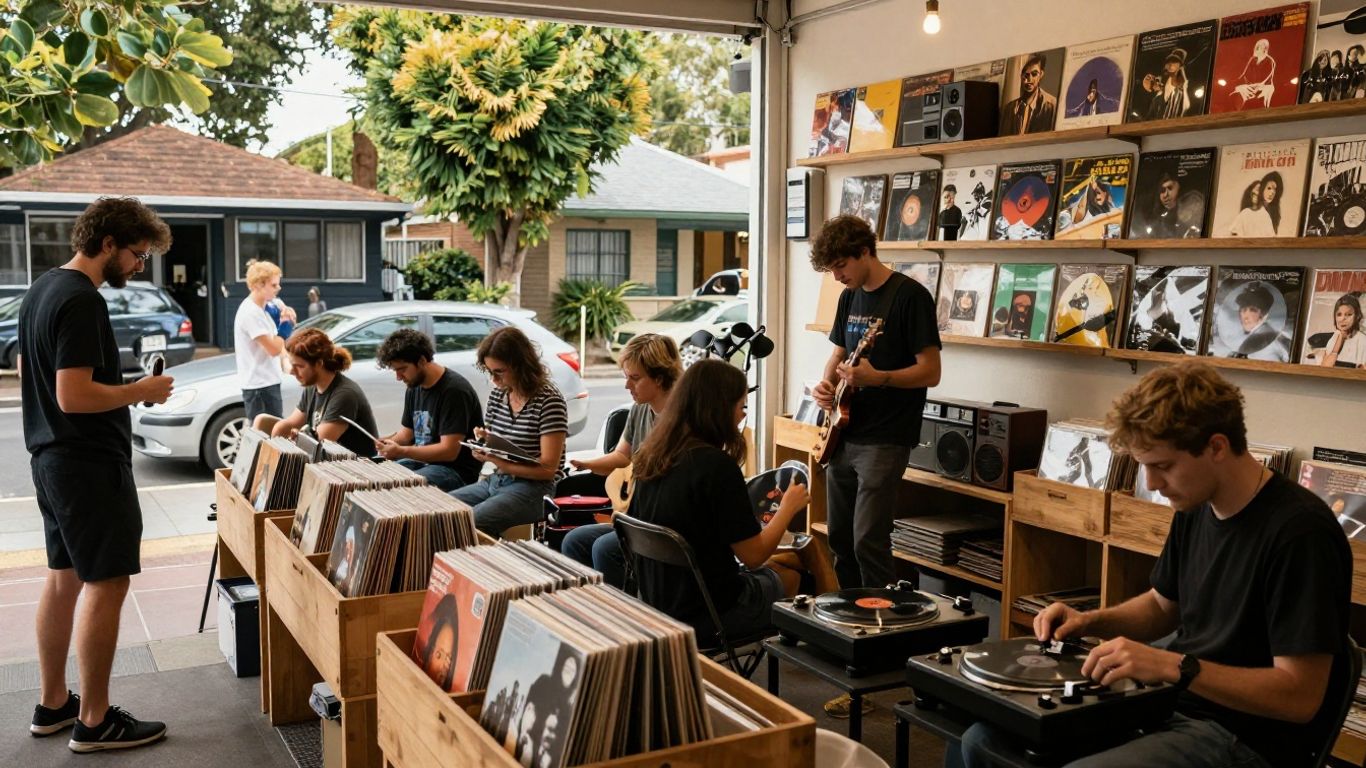
Understanding Australia’s record store scene
Australia’s record stores are varied, welcoming places where browsing matters as much as buying. Some lean towards new releases, while others are built around carefully sorted second-hand shelves and long conversations about music. With a little preparation, this record store guide australia approach helps us find shops that suit both our listening habits and our curiosity.
How independent stores differ from major retailers
Independent shops usually have a stronger personality than large retail chains. Their stock reflects the owners, buyers, and local customers, so one store may favour Australian punk while another gives more space to jazz, dance music, or unusual reissues. We also tend to find more patient advice, especially when we explain what we already listen to.
A useful independent-store visit often includes more than a quick purchase:
- Staff who can discuss pressing differences and condition
- Shelves shaped by local taste rather than broad sales targets
- Used records that change from week to week
- Events, listening sessions, or connections with nearby artists
That character is part of the value. We may leave with something unexpected, but it is usually a record we discovered rather than one we searched for by exact title.
The role of local music communities
Record stores often act as informal meeting points for collectors, musicians, DJs, and people returning to music after years away. Notices for gigs, in-store appearances, and small label releases can reveal what is happening nearby. Even a short conversation at the counter can point us towards a scene or artist we had not yet considered.
The best approach is to participate without taking over the room. We can ask questions, listen to staff recommendations, and leave space for regular customers who are there to browse quietly. Those small courtesies help keep the shop useful as a community space.
Vinyl, CDs, cassettes, and used music formats
Vinyl may be the main attraction, but Australian shops frequently carry CDs, cassettes, books, posters, and audio accessories as well. CDs can be a practical way to explore a catalogue cheaply, while cassettes sometimes offer a direct connection to local or independent releases. We should judge each format on its condition and usefulness, not on fashion alone.
Our listening setup also affects the sensible choice. A clean CD may be preferable for everyday use, while a carefully chosen record suits an evening spent adjusting the turntable and speakers. The format should serve the music and the way we actually listen.
Why city and regional stores offer different experiences
Capital-city shops often benefit from larger customer bases, regular imports, and several stores within a short trip. Regional shops may have smaller premises but can develop remarkably distinctive selections because staff know their local audience closely. Neither setting guarantees better records; the difference is usually pace, stock turnover, and atmosphere.
We should allow extra time in a regional store and avoid expecting a particular title to be available. A conversation about local collections or recent trade-ins may lead us further than a rigid shopping list. That slower rhythm is one of the pleasures of digging.
Finding the best record stores by city
The strongest shops are not always the largest or most famous. We can start with a neighbourhood, then compare each store’s format mix, opening hours, and buying focus before setting out. Melbourne has a particularly visible network of independent shops, while other capitals and regional centres reward a little more advance planning.
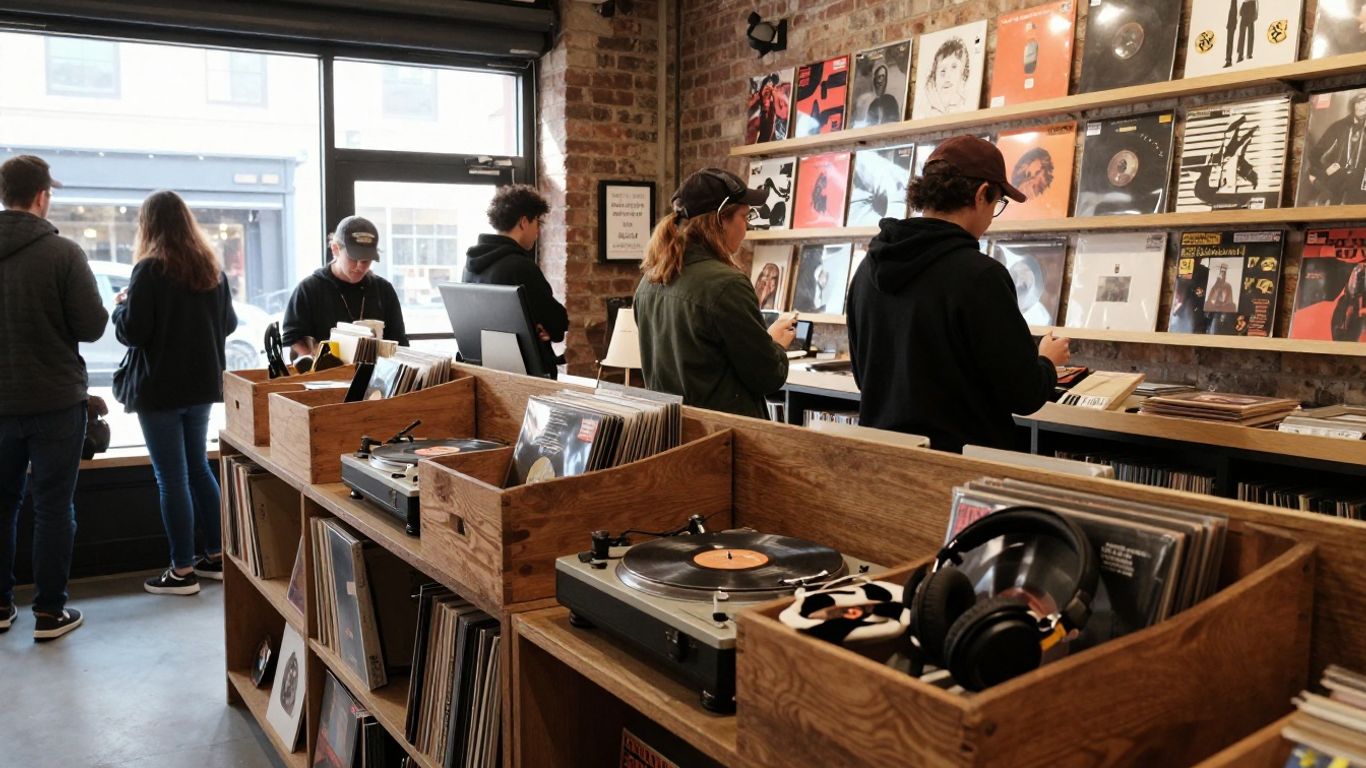
Record stores in Sydney and New South Wales
Sydney’s record shopping is spread across different suburbs, so a route is often more useful than a single destination. Inner-city and inner-west areas may offer varied new and used stock, while shops farther out can have more room for larger collections. Across New South Wales, regional stores are worth checking when we are already travelling through a town.
Before leaving, we should confirm trading hours and whether the shop buys collections. A store with a strong second-hand intake may look very different from one focused on new releases, even if both describe themselves as vinyl specialists. Calling ahead can save a long trip for a particular format.
Record stores in Melbourne and Victoria
Melbourne rewards people who enjoy visiting several shops in one outing. Neighbourhood clusters make it possible to compare shelves, prices, and specialisms without crossing the whole city. Victoria’s regional centres also have stores with loyal local followings and collections that reflect nearby music communities.
We should avoid judging a shop by its front bins alone. The more interesting stock may be filed by genre, tucked into a back room, or waiting in a recently processed crate. A relaxed browse often produces better results than rushing towards the most visible new arrivals.
Record stores in Brisbane and Queensland
Brisbane’s warm climate and spread-out suburbs make practical planning especially useful for a day of digging. We can group visits by area and leave room for travel, food, and time spent listening to recommendations. Queensland’s regional shops can be rewarding stops when we are moving between larger centres.
Stock will vary with local demand, so we should use online listings as a guide rather than a promise. A quick message about opening hours or a specific genre is sensible, particularly when a shop operates limited days. That small check keeps the day flexible without making it aimless.
Record stores in Adelaide, Perth, and other capitals
Adelaide, Perth, Canberra, Hobart, and Darwin each have their own patterns of collecting and retail. In smaller capital-city scenes, one store may cover several genres while another develops a narrow speciality. We can learn more by checking local event calendars and music-community pages than by relying only on broad search results.
Travel distance matters in these cities, especially when shops are not clustered. We should choose a realistic route and treat an unexpected closed door or sparse shelf as part of the search rather than a failure. The next shop may have a completely different buying history.
Independent stores in regional Australian towns
Regional stores can be excellent places to find older collections, local releases, and records that have not been picked over by constant visitor traffic. Their shelves may be less uniform, which makes patience valuable. We should also remember that smaller businesses may have limited staff and changing opening hours.
A polite call before visiting is helpful, and buying something modest can support the shop even when the rare find does not appear. We can also ask whether the store knows of nearby markets, fairs, or private sellers. Local knowledge often extends beyond the shop itself.
Choosing a record store for your music tastes
A store becomes “best” when its stock matches what we enjoy exploring. Genre labels are useful starting points, but they do not always describe the full buying policy of a shop. We can look for stores whose staff, shelves, and listening environment make us want to spend time there.
Stores specializing in rock, pop, and alternative music
Rock and pop sections can range from chart albums and familiar classics to punk, post-rock, garage, indie, and experimental releases. We should check how the store separates new and used stock, since a bargain common album may sit beside a collectable pressing. Browsing adjacent sections can reveal artists who do not fit neatly into one label.
When asking for help, it is more useful to name a mood, era, or few reference artists than to request “something good”. Staff can then suggest records that suit our tastes without assuming we want the most obvious title. We should still inspect the copy before committing.
Shops for jazz, soul, blues, and funk
Jazz, soul, blues, and funk collections reward attention to musicians, labels, and recording periods. A shop with knowledgeable staff may help us distinguish an affordable later pressing from a more desirable early issue, but the best choice depends on our budget and playback priorities. Clean condition is often more important than prestige.
We can also ask about compilation albums when exploring a new style. A well-chosen compilation gives us several starting points and may reveal labels or performers worth following. From there, individual albums become easier to choose with confidence.
Finding electronic, hip-hop, and dance records
Electronic, hip-hop, and dance sections often depend heavily on format, pressing, and the store’s relationship with local DJs. Twelve-inch singles, albums, white labels, and limited releases may be filed separately, so we should ask how the racks are organised. Listening stations are particularly useful when a title is unfamiliar.
We should check records for warping and surface marks, especially when they were made for club use. A visually dramatic sleeve does not tell us how the disc plays. Staff can also explain whether a release is better suited to home listening or mixing.
Classical, soundtracks, and niche collections
Classical shelves can look intimidating because filing may follow composer, performer, label, or conductor. Soundtracks may be organised by film, genre, or release format, while niche sections often depend on the individual shop. We can begin with a familiar composer, director, label, or theme instead of trying to scan everything.
Older classical records are sometimes inexpensive, but that does not make every copy worthwhile. We should inspect the disc, sleeve, and recording details, then consider whether the performance itself interests us. A bargain has value only when we will actually play it.
Stores with strong Australian music sections
A good Australian music section can connect us with local history, independent labels, regional scenes, and artists who received little international distribution. We should look beyond the most famous names and check singles, live recordings, compilations, and small-run releases. Staff may know which local titles have recently returned to circulation.
These sections are also a practical way to support domestic music culture. Buying a used record benefits the shop, while buying a new local release may support the label or artist more directly. We can ask how each item entered the store when that distinction matters to us.
Knowing what to look for when buying records
Buying used records is part detective work and part listening judgement. Price, rarity, condition, pressing details, and personal attachment all interact, so there is no universal “right” copy. We can make better decisions by slowing down and separating excitement from the inspection itself.
How to assess vinyl condition and grading
We should hold a record by its edges and inspect it under a strong light without rubbing the playing surface. Hairlines may be harmless, while deeper scratches can cause clicks, skips, or repeating noise. If the shop permits it, listening to an important purchase is the most reliable check.
Grading terms are useful shorthand, but sellers may apply them differently. A near-mint description should not replace our own inspection, particularly for older records. We should ask what a mark sounds like if the copy is playable in store.
Checking sleeve quality, pressings, and catalogue numbers
The sleeve can affect value, protection, and enjoyment just as much as the disc. We should check seams, corners, ring wear, inserts, inner sleeves, and any writing or stickers. Catalogue numbers on the spine, labels, and runout area can help us compare a copy with known releases.
A quick inspection works best when we follow a consistent order. We can check the sleeve first, then the labels, then both sides of the record, and finally any included artwork. That routine reduces the chance of discovering a missing insert only after getting home.
Identifying original releases and reissues
Original releases and reissues can look deceptively similar, particularly when artwork has been reproduced faithfully. Label design, catalogue number, country of manufacture, barcode, and matrix information can all provide clues. We should consult a reliable discography when the distinction affects the price.
There is nothing wrong with choosing a reissue. Many are easier to find and may be better suited to regular listening than an expensive original. The key is knowing which version we are buying and whether the price reflects that version accurately.
Comparing prices for rare and common records
Rare records deserve comparison because asking prices can vary widely. We should search completed sales where possible, compare condition and pressing details, and avoid treating a high listing price as proof of market value. Common records need the same discipline, even when the amount seems small.
A simple three-part check keeps the decision grounded:
- Confirm the exact release and condition.
- Compare it with similar copies rather than unrelated listings.
- Decide whether we want the record at that price today.
This approach protects us from paying for a story attached to the record rather than the record itself. It also leaves room for the occasional impulse purchase without making every purchase an argument about rarity.
When to ask staff for recommendations
Staff recommendations are most useful when we offer a little context. We can mention a few albums we love, whether we prefer clean pressings or historical originals, and how much experimentation we want. The more precise the question, the more likely the answer will be genuinely useful.
We should not feel obliged to buy a recommendation. A good shop will let us consider it, inspect the copy, and return to it later if needed. Trust grows when advice remains helpful even when the sale does not happen.
Planning a successful record store visit
A satisfying record-shopping day needs less preparation than a major trip, but a few checks prevent avoidable frustration. We should know our route, carry a realistic budget, and leave enough time to browse without treating every shelf as a timed challenge. Comfortable shoes and a suitable bag help more than they sound.
Using store websites and social media before you go
Websites and social pages can confirm opening hours, new arrivals, sales, events, and the kind of stock a shop is currently promoting. They are useful signals, not complete catalogues. We should still contact the store directly if a particular title or format is central to our trip.
Online photographs can also reveal how a shop files its records. That helps us decide whether to bring a want list, plan a genre-focused visit, or simply arrive ready to browse. We should keep expectations flexible because popular stock may sell quickly.
Timing visits around restocks, sales, and Record Store Day
Restock days can be worthwhile for collectors who enjoy fresh second-hand selections, while sales may suit anyone building a broader library. Record Store Day brings special releases and community activity, but it can also mean queues, limited stock, and a busy atmosphere. We should check participating-store details before making a dedicated trip.
Ordinary weekdays often offer a calmer browse. If we visit during a major event, patience and courtesy matter because staff are balancing many customers and time-sensitive stock. The best purchase is still one we genuinely want to hear.
Building a practical shopping budget
We can set a total budget and a separate amount for unexpected finds. That prevents one expensive record from consuming the money intended for several everyday listens. A note on our phone with wanted titles, acceptable pressings, and upper limits is often enough.
We should also allow for cleaning supplies, inner sleeves, or a protective outer sleeve when the purchase needs them. These small costs are part of maintaining a collection rather than afterthoughts. A modest budget can still produce a productive visit when we buy selectively.
Visiting multiple stores in one day
A multi-store route works best when shops are grouped by suburb or connected by straightforward public transport. We should leave gaps between stops because browsing always takes longer than expected. A quick meal or coffee break can help us make calmer choices later in the day.
Carry records upright and avoid leaving them in a hot car. We can keep a note of what we have already bought so that excitement does not lead to accidental duplicates. Comparing notes between stores also sharpens our sense of local pricing.
Supporting independent retailers responsibly
Independent retailers rely on repeat customers, respectful browsing, and realistic expectations about stock. We can support them by buying when the price is fair, recommending a shop to people with similar interests, and following their event information. We should also avoid handling records carelessly or blocking aisles while chatting.
A store does not need to have our ideal copy every time to deserve support. Sometimes the useful contribution is a small purchase, a considerate question, or returning another week. Healthy shops give collectors more places to discover music.
Buying records online from Australian sellers
Online buying is practical when we want a specific release or need to search across several cities. It is less tactile than visiting a shop, and photographs cannot always reveal every surface mark. We should treat listings as information to verify rather than a substitute for inspection.
Comparing online marketplaces and specialist stores
Large marketplaces usually offer broad choice and easy searching, while specialist stores may provide better descriptions and more focused stock. Local online shops can also make collection or domestic delivery simpler. We should compare the exact release, condition, seller location, and total cost rather than only the headline price.
A specialist listing may cost more but save time when the copy has been carefully identified. Conversely, a marketplace can be useful for common albums where small differences in pressing matter less. The right option depends on what we are trying to find.
Verifying seller ratings and product descriptions
Seller ratings are helpful, but we should read recent feedback and look for comments about grading, packing, and communication. A description should identify the release and explain notable wear rather than relying on a generic condition label. If photographs are unclear, asking for more detail is reasonable.
We should be wary of listings that combine several versions under one photograph or title. Catalogue numbers, labels, and matrix information can prevent an expensive mistake. Clear communication before payment is usually easier than resolving a disagreement afterwards.
Calculating shipping, insurance, and return costs
The delivered price includes more than the record. We should check postage, packaging, tracking, insurance, taxes where relevant, and the seller’s return terms before placing an order. A seemingly cheap copy may not be good value once those costs are included.
For a valuable or fragile purchase, we can ask how loss or damage is handled. Return policies may differ for incorrectly graded items, changed preferences, and transit damage. Reading those terms gives us a clearer basis for comparison.
Protecting records during delivery
Records should be packed in a sturdy mailer with proper stiffeners, and the disc is often safer outside the sleeve to prevent seam splits. An outer sleeve can protect the jacket from scuffing, while corner support reduces crushing. We should keep the parcel flat or upright and away from heat after delivery.
When it arrives, we can photograph obvious damage before opening further and compare the contents with the listing. A careful unboxing makes it easier to explain a problem clearly if one occurs. Good packing cannot prevent every accident, but it reduces common ones.
Deciding between online convenience and in-store discovery
Online shopping suits a precise want list, difficult-to-find pressing, or a buyer who cannot easily reach a shop. In-store browsing gives us touch, chance discoveries, immediate staff advice, and the ability to inspect a copy ourselves. We can use both without treating either as the only proper way to collect.
Our own listening habits should guide the balance. We might buy reliable everyday titles online and reserve weekends for curious, unplanned browsing. That combination keeps the collection personal while making specific searches less tiring.
Conclusion
The best Australian record-shopping experience comes from matching the shop to our tastes, checking condition carefully, and leaving room for discovery. We can plan sensible routes, ask thoughtful questions, and support independent retailers without turning collecting into a race. Whether we return with a rare pressing or an inexpensive album we play for years, the search is part of the music’s story.
Frequently Asked Questions
How do we find good record stores in Australia?
We can search by suburb, check opening hours and current stock online, read local music recommendations, and ask collectors or staff for suggestions. Visiting more than one shop helps us compare each store’s focus and atmosphere.
Is vinyl always better than CDs or cassettes?
No format is automatically better for every listener. Vinyl offers a tactile experience, while CDs and cassettes can suit different budgets, collections, equipment, and listening habits. Condition and personal enjoyment matter more than fashion.
What should we check before buying a used record?
Inspect the disc under good light, look for scratches and warping, check the sleeve and inserts, and confirm the pressing details. If possible, listen to the record or ask staff about any visible marks.
Are original pressings worth more than reissues?
Sometimes, but value depends on demand, condition, pressing details, sound, and how much a collector cares about the release history. A well-made reissue may be the better everyday choice.
How much should we budget for record shopping?
We should set a total amount before visiting and leave a little room for accessories or an unexpected find. Comparing condition and release details is more useful than following a fixed price rule.
Is buying records online safe?
It can be, provided we check seller feedback, photographs, release information, packing methods, delivery costs, and return terms. Clear descriptions and tracked, protective shipping reduce avoidable problems.
What is the best way to support an independent record shop?
We can buy when the price and item suit us, handle stock carefully, attend suitable events, recommend good shops, and respect staff time. Returning regularly helps build a healthy local music community.